This is a brief overview of MIT Battlecode 2026's game. This year's theme was Uneasy Alliances.
Game Overview
This year had two win conditions. Either kill all of the enemy's kings or have more points by the time the game ends.
The primary resource to manage was cheese. Many actions, including spawning new units costed cheese. Other actions, such as attacking, could optionally consume cheese to be more effective.
Units
Rat King
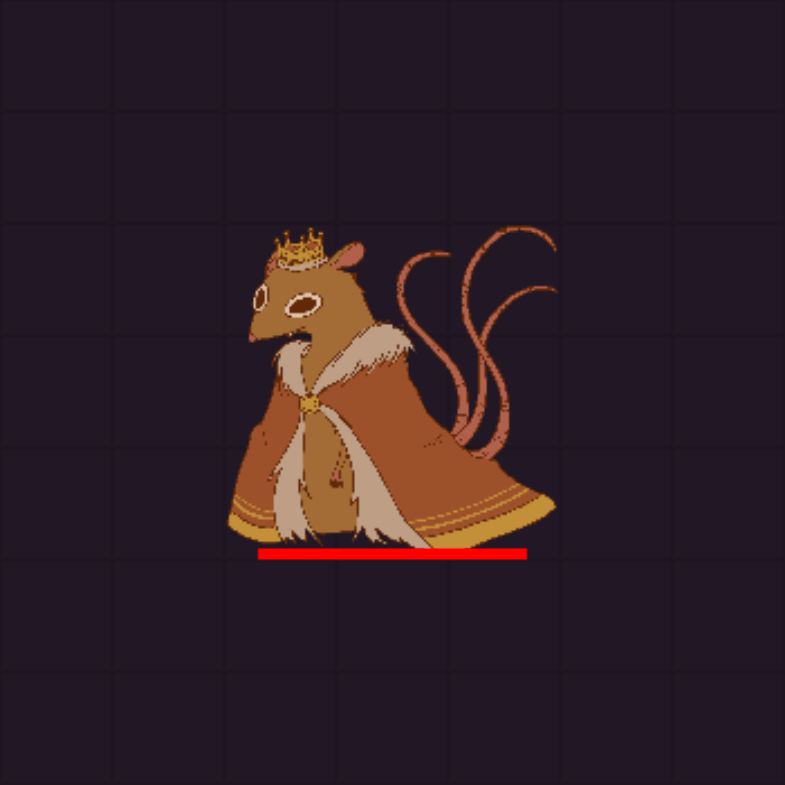
Rat kings act as your main control center. You start the game with one, although it is possible to form new ones later on. If all of your rat kings die, you lose the game. The Rat King is the only way to produce more baby rats. Each rat king consumes 2 cheese per turn. You could form a new rat king by spending some cheese and combining 7 baby rats contained within a 3x3 square.
Baby Rats
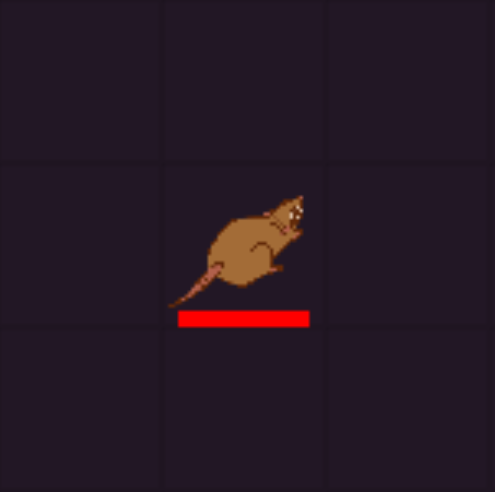
Baby rats act as your workers and soldiers. Their view range is limited to only in front. Baby rats primarily carry cheese back to the king or attack enemy rats. They have significantly less health than the king, but can move much faster. New Baby Rats cost a base 10 cheese with an increasing cost for every currently alive baby rat. This means producing baby rats is more expensive the more baby rats you currently have.
Cat
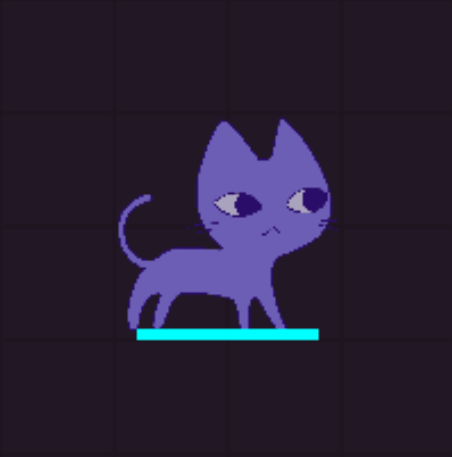
Cats were a unique introduction to this year's game. Cats are neutral units controlled by neither player. Cats would attack rats and rat kings, so it was important to develop strategies to combat cats. Dealing damage to cats could award a significant amount of points, however cats could often kill a baby rat in a single hit and also have a very large amount of health. Cats provided a significant source of variablilty in games and received many behaviour fixes and balance patches throughout the competion making dealing with them particularly difficult.
Cooperation and Backstabing
This year had a strange new mechanic where the game started in Cooperation mode. However, if any rat attacked or did damage through traps to another rat, the game would permanently enter Backstab mode. In Cooperation mode, the game could be ended prematurely by killing all cats. The way winners are decided also changes based on what mode the game ends in. In practice, 99% of games would end in Backstab mode; however, a few times in tournament we saw cooperation mode wins on occasion.
Ending the Game
There were three ways to end the game.
- All of a team's kings died
- All cats are killed in
Cooperationmode - Round 2000 is reached
If all of your kings die, you automatically lose. Otherwise, the game is scored based on a points system calculated from total cheese collected, the number of rat kings, and damage dealt to cats. The way these factors were weighted depended on what mode the game ended in.
Cheese Mines
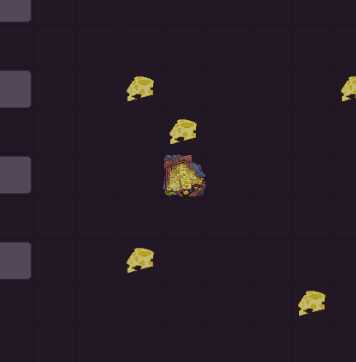
Cheese mines are locations on the map that produce cheese over time. An important aspect of the game is quickly locating cheese mines and returning cheese efficiently.
Traps
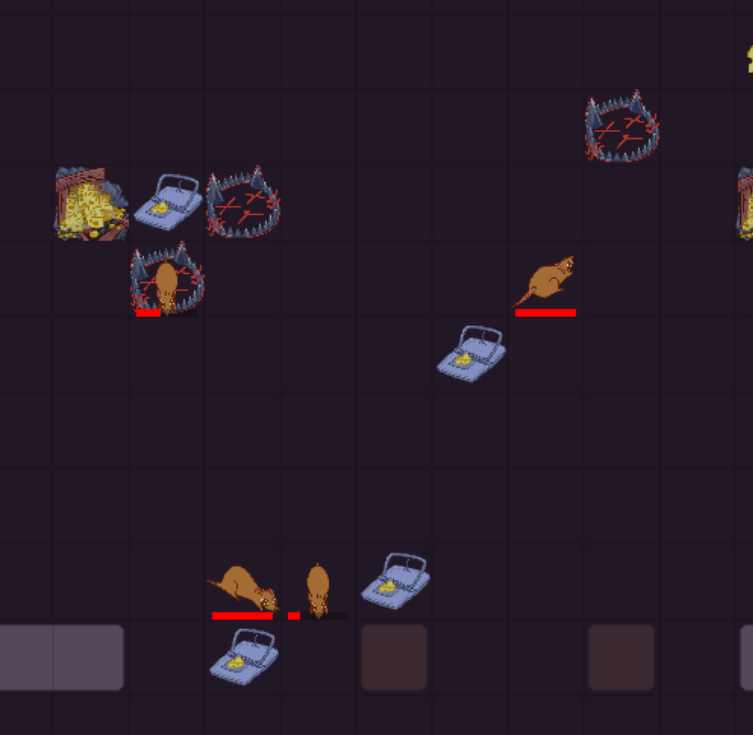
Both teams could place a limited number of rat and cat traps on tiles. Placing these traps costs cheese. Cat traps can only be placed in Cooperation mode. (Although there was a delay for the team that didn't trigger the backstab.) Placing rat traps effectively was an important part of combat and map control. Traps would stun and do a significant amount of damage to any rats that move nearby.
Dirt
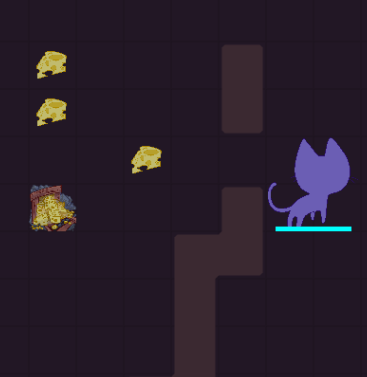
Dirt tile could be mined and placed by rats. Dirt is extremely useful to protect the king from the cats. However, it wasn't used for much else, at least among the top teams.
Map Examples
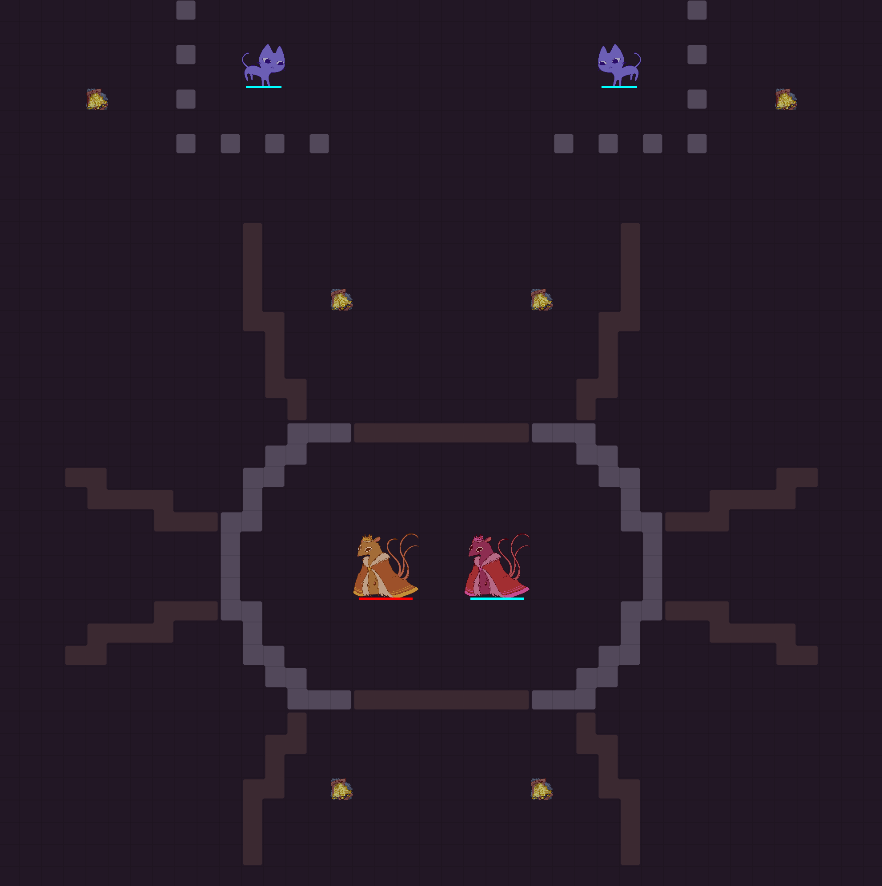
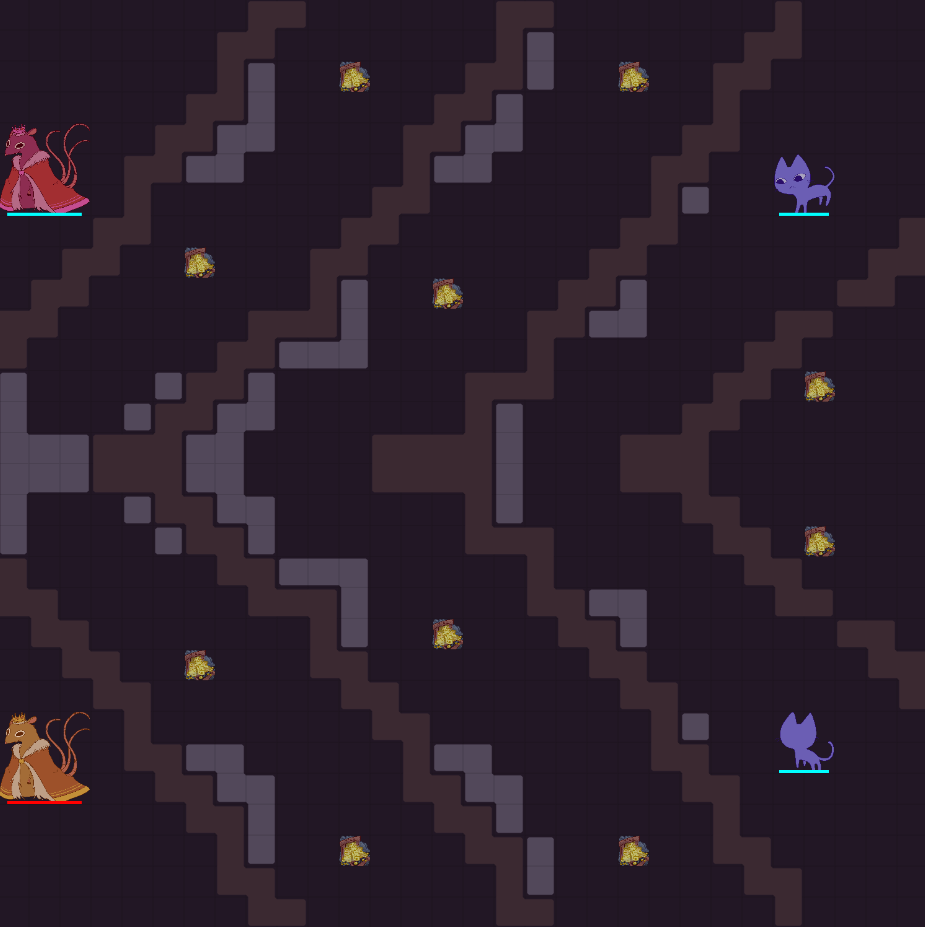
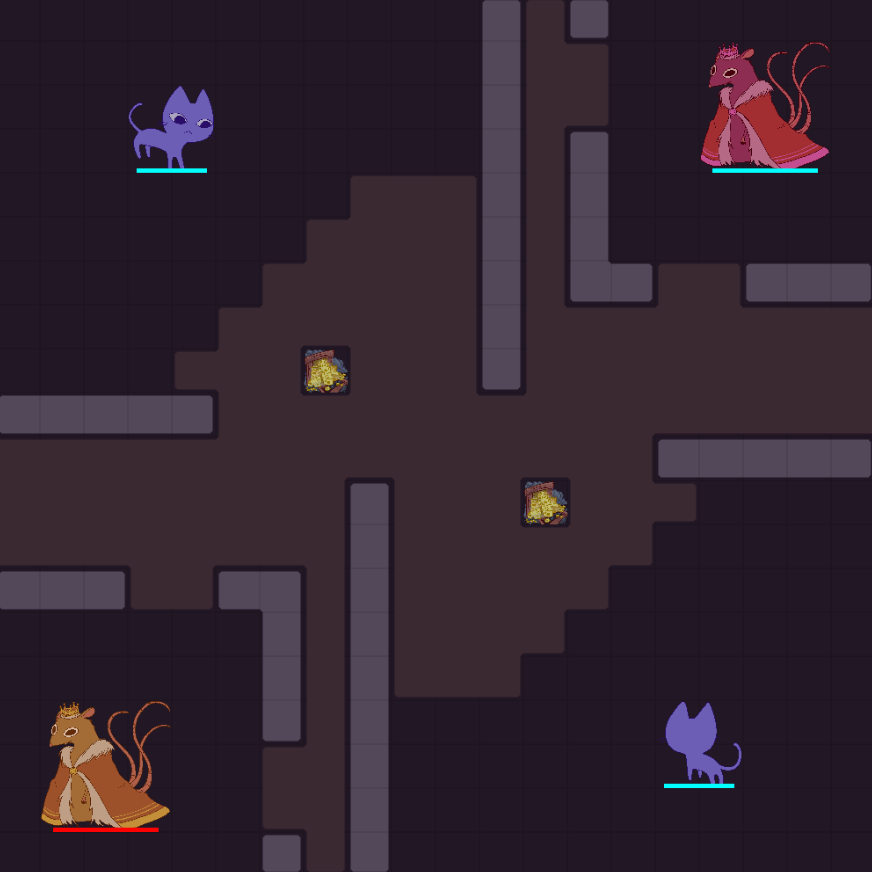
Here's some examples of maps used currently in the ranked scrimmages.
Okay now back to our postmortem.